Home Organization
Pre-Listing Home Organization in Ottawa: A Room-by-Room Plan Before Photos
A practical room-by-room organization plan for Ottawa sellers who want clearer listing photos, functional storage and less last-minute shuffling.
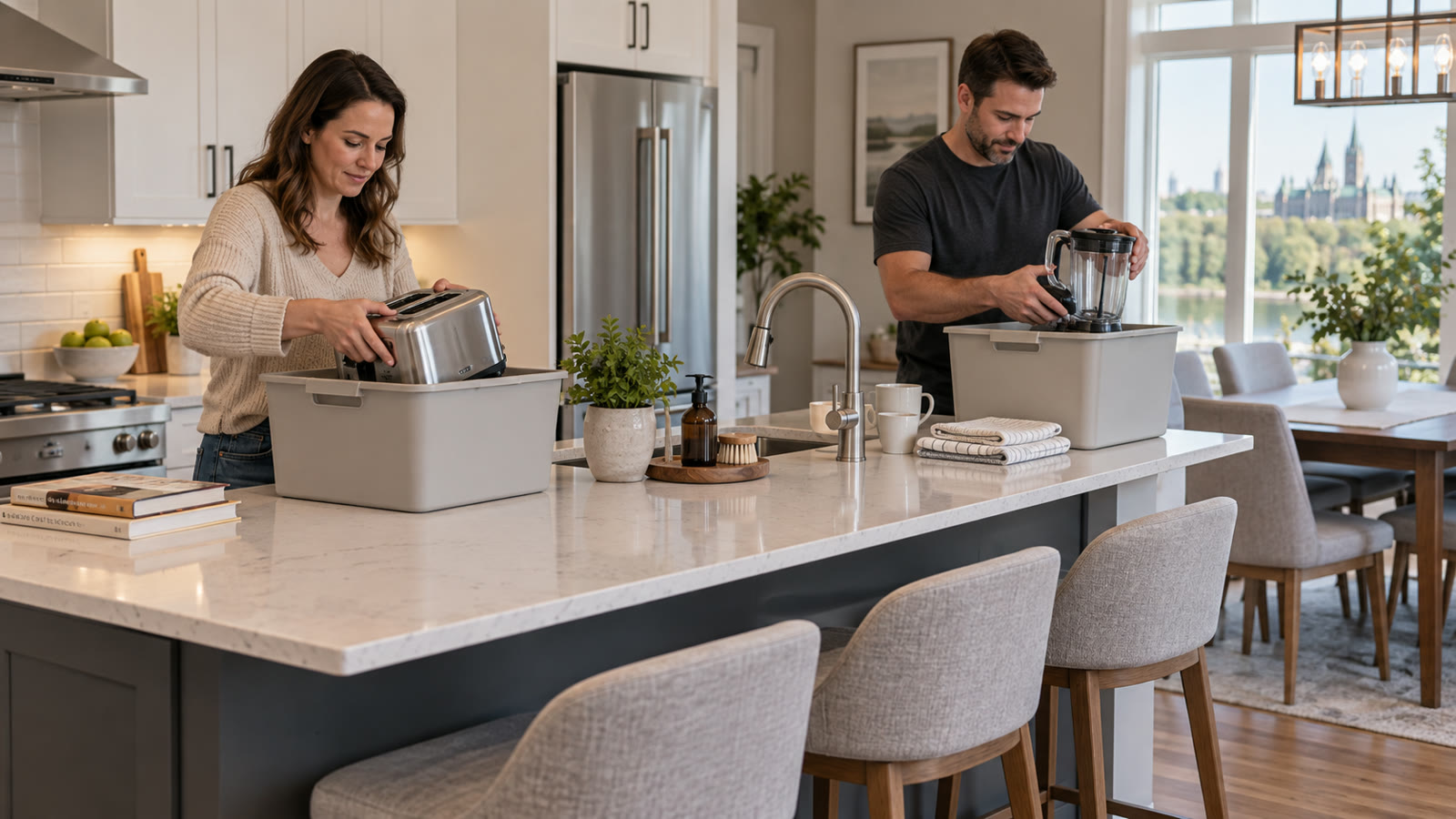
Listing photos are often a buyer’s first real tour of a home. Organization helps those photos explain the rooms clearly: where people sit, how they move through the space, how much work surface is available and where everyday belongings can be stored. The goal is not to strip a home of personality or make it look unoccupied. It is to reduce visual competition so the layout and useful features are easy to understand.
For Ottawa sellers, this work is usually easiest when it begins before the photographer, cleaner or staging consultation arrives. A deliberate room-by-room plan prevents the familiar last-minute result: crowded bins in the garage, small appliances moved from one counter to another and personal items hidden in closets that buyers may open during showings.
Begin with the purpose of each room
Walk through the home as if you had never seen it. Identify the primary purpose of every room and the features the listing photos should communicate. A dining room should read as a comfortable place to eat, not as a temporary office, parcel station and craft-storage area. A spare bedroom can still contain a desk, but buyers should be able to recognize the bed, storage and walking space immediately.
- Keep items that support the room’s main use and fit comfortably in the available storage.
- Store seasonal, highly personal or seldom-used belongings that distract from permanent features.
- Remove broken, duplicate or unwanted household items instead of moving them repeatedly.
- Relocate anything that blocks windows, doors, vents, electrical panels or utility access.
- Make a separate essentials group for medication, documents, chargers and daily necessities that must remain easy to reach.
Plan backward from the photography appointment
Start with the confirmed photo date and work backward. Leave enough time to make decisions, remove unwanted items, organize what remains and complete the final interior clean-up. Trying to do all four at once often slows the process because every surface becomes a sorting area. Complete one room or one category at a time, and establish a temporary holding zone that will not appear in photographs or interfere with showings.
- Confirm which rooms, storage areas, exterior spaces and building amenities will be photographed.
- Ask the real-estate professional whether furniture changes or staging items are planned.
- Measure large items before deciding they will fit in a locker, vehicle or alternate room.
- Use sturdy plain bins for items that will stay in the home; avoid overfilling them.
- Book ordinary non-hazardous junk removal early enough that the room can be checked again afterward.
Make the entrance easy to read
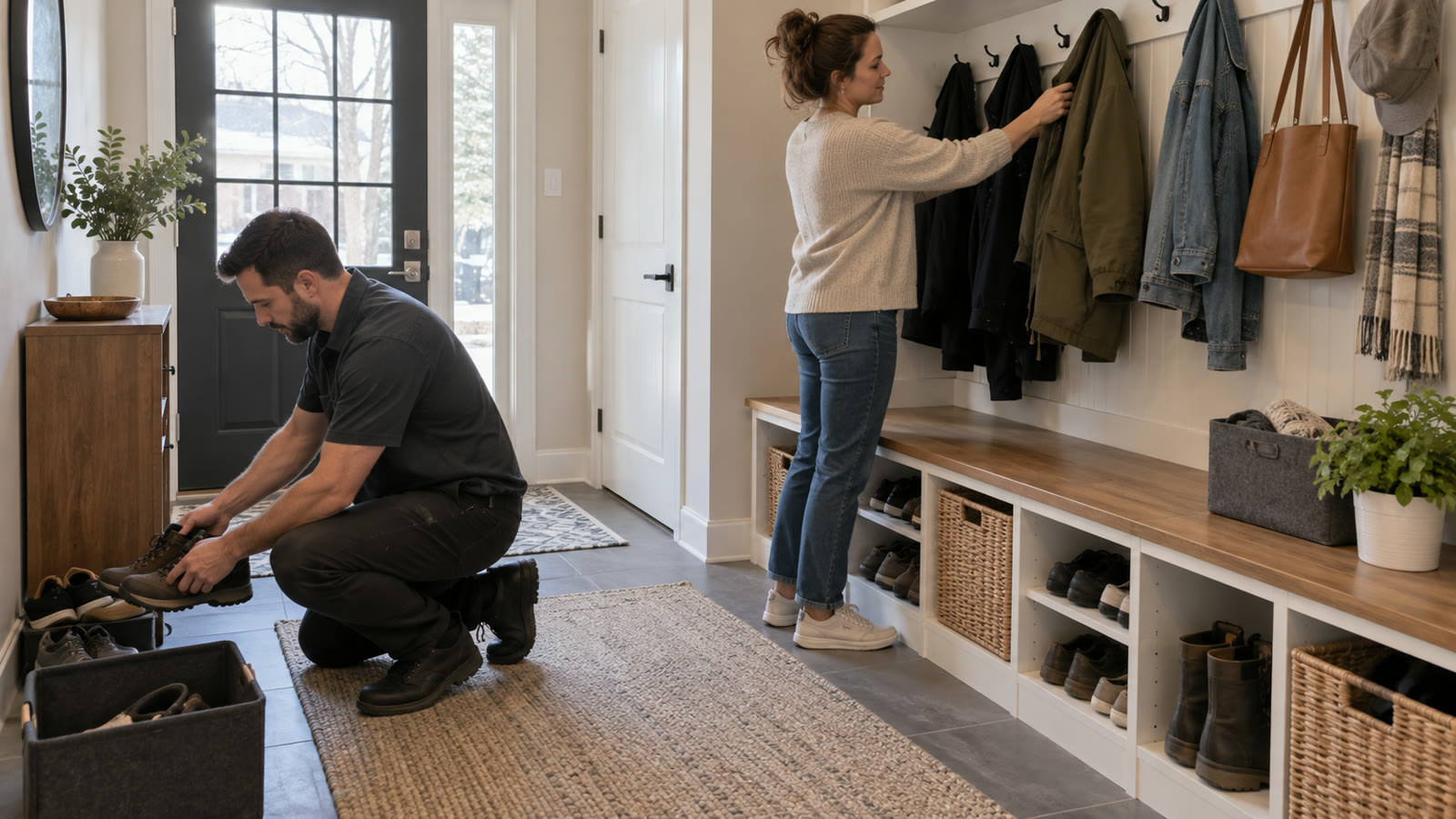
The entrance sets the scale for the rest of the home. Keep the walking path from the door to the main living space completely clear. Reduce footwear to the pairs currently in use, remove off-season coats and assign one basket or drawer to small items such as gloves, dog leads and keys. If the entry has a bench, shelf, closet or built-in cubbies, show that storage working without packing it to capacity.
In condos and townhomes, the entry may also be the only practical transition space. A narrow console, oversized plant or extra shoe rack can make it feel tighter than it is. Move furniture only when there is a safe destination for it and when the new layout improves both the photograph and everyday circulation.
Let kitchen counters show their working area
Kitchen counters are valuable visual information. Clear enough surface to reveal uninterrupted preparation space, especially around the sink, cooktop and main work zone. Keep a small number of intentional items rather than spreading appliances, dish racks, paper, vitamins and charging cables across the room. Counter stools should remain visible and usable if they help explain the island or breakfast bar.
- Remove magnets, schedules and personal paperwork from appliance fronts.
- Group the appliances used every day and store the rest safely.
- Clear the sink and drying area before the photographer arrives.
- Reduce open shelving to a simple, stable arrangement that will not need constant adjustment.
- Check the top of the refrigerator, window ledges and the ends of counters for overlooked items.
- Do not hide water damage, unsafe wiring or other material concerns behind bins or décor.
Edit living and dining rooms around movement
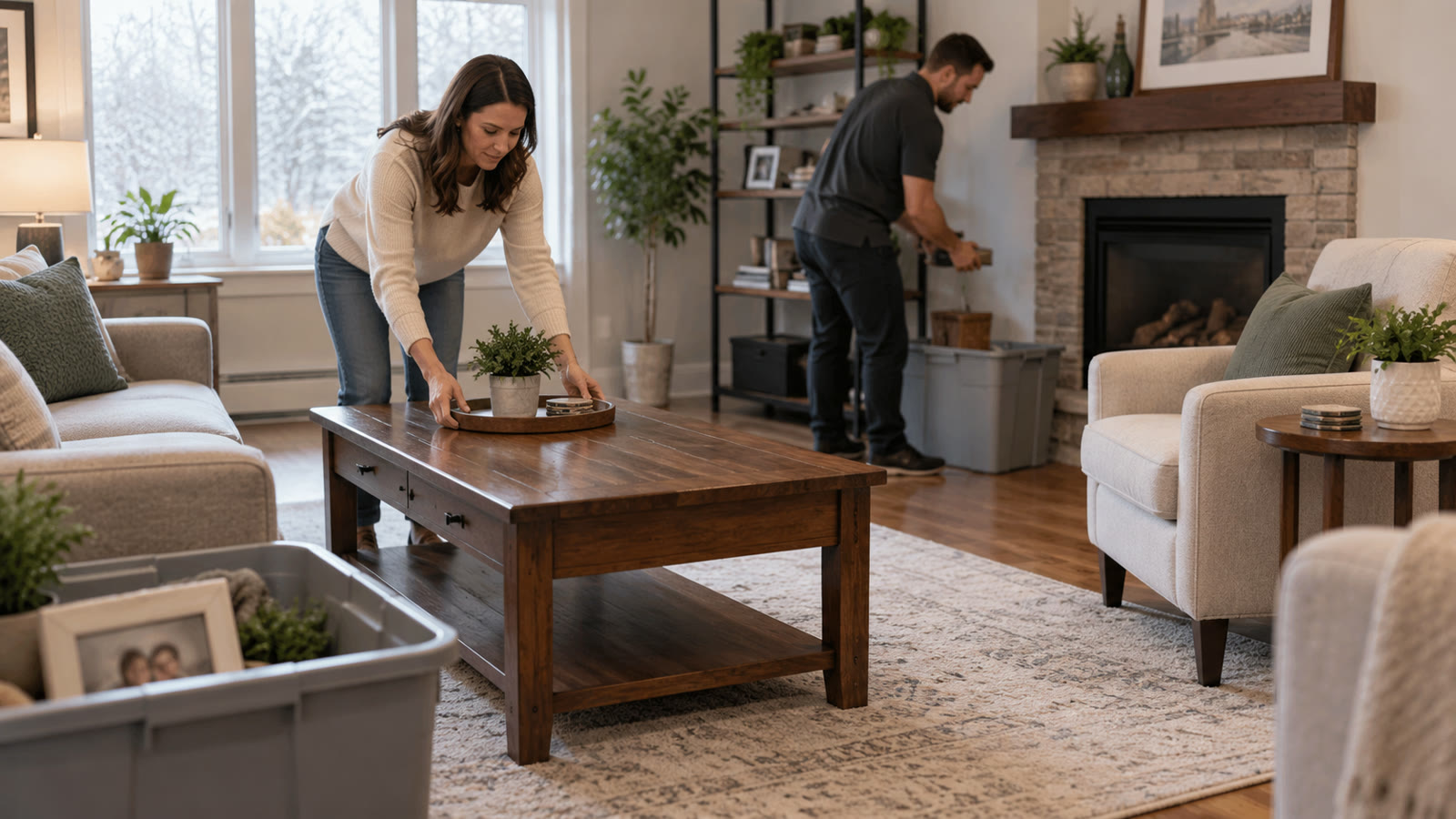
In living and dining areas, buyers need to understand both seating capacity and circulation. Keep clear routes between doorways, windows and adjoining rooms. Side tables should not crowd chair arms or narrow a walkway. A coffee table can help define a seating group, but its surface should be mostly open. In the dining room, keep enough chairs to demonstrate the table’s practical size without making the perimeter difficult to navigate.
Personal photographs and collections do not all need to disappear. Reducing their number can keep the eye on windows, built-ins, flooring and room proportions. Pack fragile or valuable items carefully rather than placing them in a hurried pile. Label the outside of each bin for your own move inventory, but keep labels turned away or remove the bins before photography.
Treat bedrooms, closets and bathrooms as storage tests
Bedrooms should show where the bed fits, how doors operate and whether dressers or desks leave reasonable walking space. Remove laundry, extra bedding and floor-level storage that makes the room appear smaller. In closets, aim for orderly access rather than an unrealistic empty space. Buyers may look inside, so avoid pushing loose items behind the door or stacking them where they could fall.
- Keep nightstands simple and route charging cords neatly.
- Use under-bed storage only when it is contained and does not protrude.
- Fold linens consistently and leave shelves accessible.
- Clear bathroom counters while keeping daily products together in a portable caddy.
- Remove excess towels, empty containers and expired ordinary household products through appropriate disposal channels.
- Keep cleaning products, medications and sharp items secure during showings.
Decide what leaves the property
Pre-listing organization becomes much faster when unwanted items have a defined destination. Separate belongings into keep, donate, recycle and ordinary non-hazardous removal groups. Confirm that donation centres or recycling programs accept the items before loading a vehicle. Mattresses, electronics, paint, chemicals and other regulated materials may require different handling; identify them accurately rather than placing everything in one pile.
If Mattabo is asked to remove items, describe them honestly and photograph the access route. Mention stairs, elevators, parking restrictions, narrow doors and heavy pieces. The scope should be confirmed before the crew arrives. Mattabo does not remove hazardous material, and questionable items should be discussed in advance.
Use a simple photography-day reset
- Put daily essentials into their assigned caddy, drawer or bin.
- Remove garbage, recycling, pet bowls and temporary sorting containers from photographed rooms.
- Open curtains or blinds as directed and check that window ledges are clear.
- Straighten chairs, bedding and rugs without concealing damage or access points.
- Turn on the lights requested by the photographer and replace failed bulbs beforehand.
- Walk through at waist height as well as eye level; counters, table surfaces, chair backs and floor paths should all remain visible.
After the photos, maintain a small daily reset rather than recreating the entire project before every showing. One portable essentials bin per occupied bedroom or bathroom can help. Choose a secure, agreed location for those bins when visitors arrive, and keep exits, mechanical equipment and common routes clear.
What to send for a firm quote
Send wide photos of each room plus close views of crowded storage areas, furniture to be moved and ordinary non-hazardous items that may leave the property. Include the Ottawa address, the photography or listing deadline, parking and access details, and whether the job includes organization, interior clean-up, junk removal or a combination. Identify any condo booking rules, elevator reservations or time restrictions.
Mattabo Property Care is fully insured for the services it provides. Same-day service is often available but is not guaranteed until Mattabo confirms the appointment.
Photos are illustrative examples of typical residential service results.